
What Is the Principle Behind Glasses-Free 3D Technology?
Today, glasses-free 3D technology is undergoing continuous breakthroughs and iterations, gradually shedding its "niche novelty" label. It has evolved from "viewable" to "usable and practical for daily use," overcoming its previous core technical bottlenecks: the impossibility of combining 2D and 3D, dizziness during viewing, and narrow viewing angles.
What Is Glasses-Free 3D?
In plain language: without wearing 3D glasses or any specialized face-mounted equipment, the characters and scenes on the screen appear to be happening right in front of you—as if, physically, you could reach out and touch them.
What Is the Principle?
It simply exploits human "binocular parallax." Try extending a finger and closing your left and right eyes alternately—you'll notice the finger's position shifts and the viewing angle differs. When the brain combines the two images, a sense of depth emerges.
Where Was the Fatal Weakness Before?
For physical objects in real space, both eyes naturally capture images from different viewpoints; but a screen is flat and its content fixed, and earlier technologies struggled to let the left and right eyes see completely different images on the same screen.
The earliest approach was grating technology—as the name suggests, adding a layer of "fence" inside the screen, like vertical venetian blinds. Depending on position, this "fence" selectively blocks part of the light, and the 65 mm separation between the left and right eyes happens to receive different images, which the brain fuses into a stereoscopic image.
This technology had a simple structure and low cost, and early glasses-free 3D phones and advertising screens worked on the same principle.
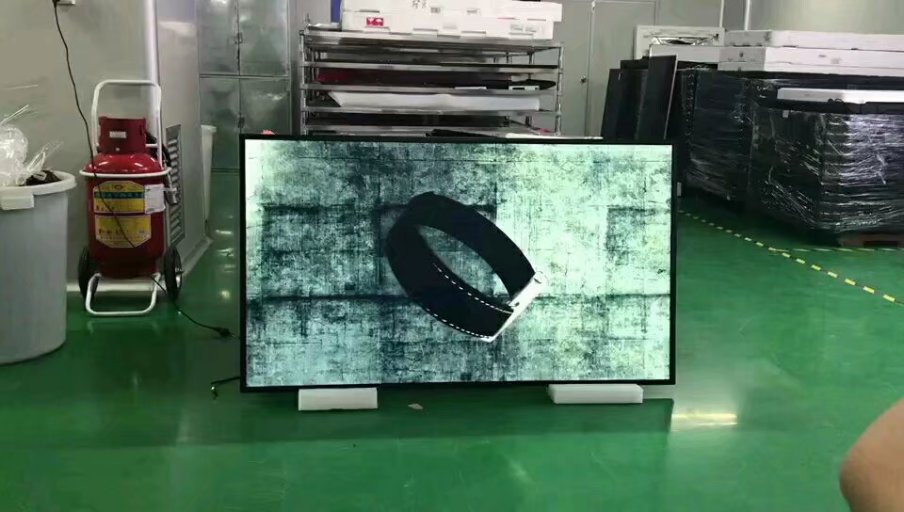
Its drawbacks were dimness, visible stripes, and ghosting, and it has long been phased out.
Next came fixed lenticular lenses—a layer of "tiny cylindrical convex lenses" attached inside the screen. This is the same structure as the "lenticular grating" used in invisibility tricks, both guiding light through "lens refraction"—splitting the screen's pixels and directing the light from different sub-pixels into the left and right eyes, forming natural parallax and thereby synthesizing a stereoscopic picture.
This preserved brightness and stabilized the 3D, but a new problem arose: because the physical bumps were fixed, when viewing 2D content you always felt as if looking through frosted glass—lacking clarity. Moreover, you had to sit still like a statue; the slightest movement and the 3D effect collapsed.
Where Is the Breakthrough?
Current mainstream technology is based on fixed lenticular lenses but adds electronic control compensation and AI eye tracking.
Today's fixed lenticular lenses are ultra-thin; voltage controls the rotation of liquid crystals to compensate the refractive index of the lenticular lens, enabling switching between 2D and 3D modes and, to a certain extent, alleviating the previously hazy 2D picture.
Even so, is there no way to remove this fixed film entirely and free 2D image quality from physical structural limitations?
The answer is yes. ViewX's pure liquid crystal lens solution (GRIN LC) no longer relies on physically etched fixed bumps; the lens is formed purely by electronically controlled liquid crystal molecules, completely eliminating optical interference in 2D mode and achieving uncompromised 2D display quality.
How Does It Still Achieve Glasses-Free 3D?
In 2D mode, the liquid crystal molecules align in order. With no voltage applied, the liquid crystals align in reverse parallel, forming a highly transparent optical layer with a light transmittance of 80%—3% to 8% higher than traditional lenticular lenses (close to pure glass). This places it in the top tier of light transmittance among current glasses-free 3D display solutions, with no grating patterns, no haziness, indistinguishable from ordinary high-end 2D screens, and even superior in reflection control.
In 3D mode, controlled voltage makes the liquid crystal molecules "align directionally," forming a "parabolic gradient refractive index" (similar to the refraction effect of traditional lenticular lenses). It precisely directs the light from the screen's sub-pixels into the left and right eyes, achieving perfect separation of the left- and right-eye images with extremely low crosstalk.
How Is the "Dizzy the Moment You Move" Problem Solved?
The answer is 180fps+ high-speed eye tracking.
180fps means the system updates your eye data every 5.5 milliseconds. By comparison, a human blink takes roughly 100-400 milliseconds—time enough for ViewX to complete dozens of tracking cycles.
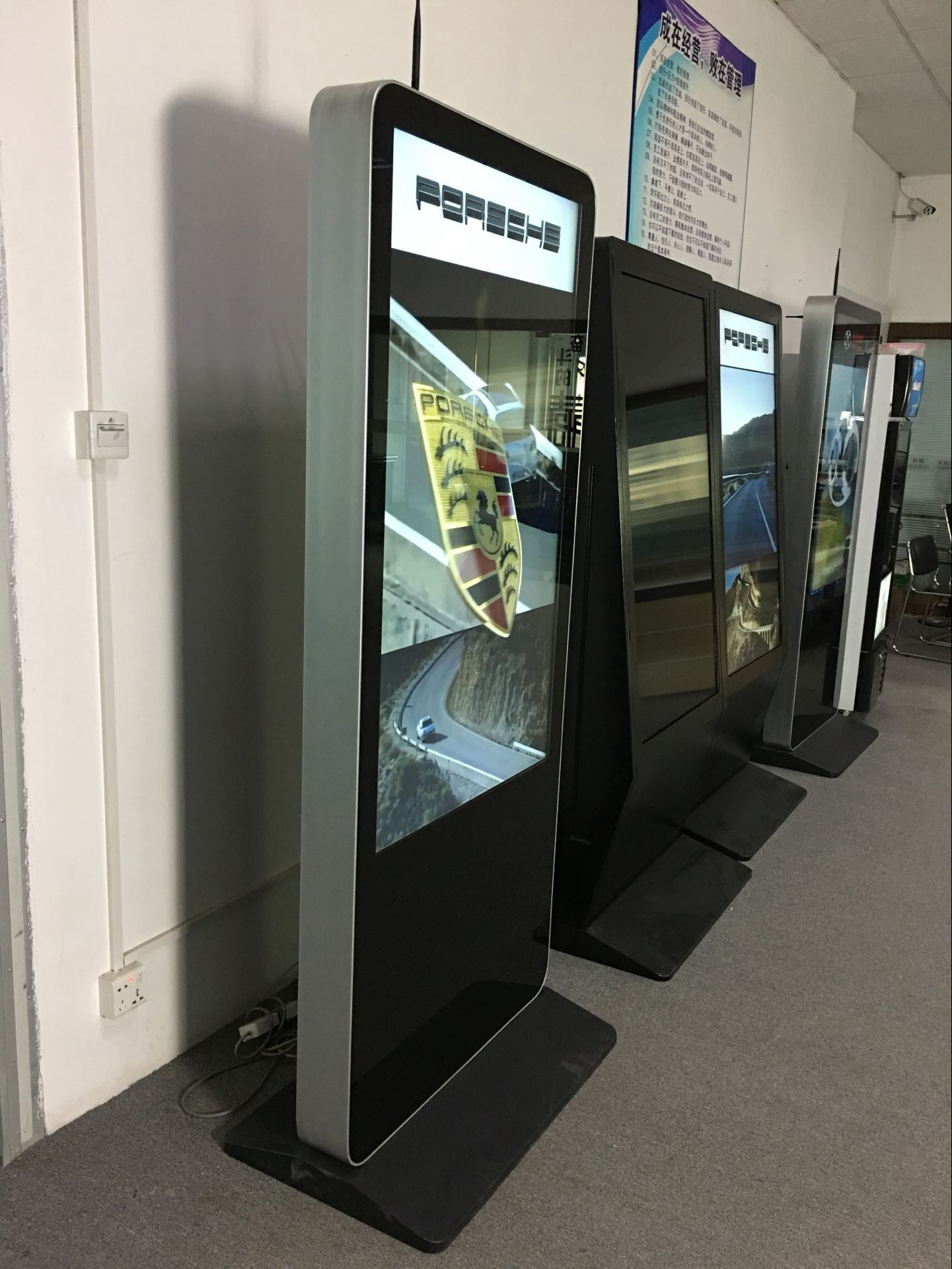
The vast majority of mainstream solutions today run at 60-120fps, while only professional-grade/laboratory equipment touches the 180fps or even 240fps threshold. So achieving a 180fps+ tracking frame rate is strong evidence that this system has received heavy R&D investment in both hardware sensors (high-frame-rate infrared cameras) and underlying AI algorithm computing power.
Why Pursue Such High Tracking Speeds?
Anti-dizziness: when tracking speed keeps up with head and eye movement, the picture no longer lags behind. High frame rates compress latency to extremely low levels, preventing the dizziness and nausea caused by the brain's "sensory conflict."
Wider viewing freedom: with sufficient speed, even if you move around drastically, the screen can instantly lock the viewing zones for the left and right views onto your eyes. You are no longer confined to a "statue" posture and can move freely.
Computing savings: 180fps precisely locks the eye's position relative to the screen, directing the screen's built-in AI chip to use its power where it matters most—concentrating computing resources on the core image you are staring at.
If a glasses-free 3D screen is a key to the stereoscopic world, then 180fps+ high-speed eye tracking is the precision damping that lets the 3D picture follow your gaze seamlessly, smoothly, and without trailing artifacts.
Today's latest glasses-free 3D technology—whether the upgraded electronically controlled liquid crystal lenticular lenses or the breakthrough pure liquid crystal lens—has made glasses-free 3D truly "practical for daily use" rather than an "occasional novelty" by upgrading liquid crystal materials, optimizing electrode design, and adding high-speed eye tracking and AI computing power. We hope more high-quality technologies will emerge, bringing glasses-free 3D truly into everyday life.
Looking for Commercial Glasses-Free 3D Display Solutions?
FreeGlass3D (Shenzhen ZXT LCD Technology Co., Ltd.) designs and manufactures commercial-grade autostereoscopic 3D monitors, spatial digital signage, and multi-view 3D video walls with 4K/8K resolution and eye-tracking options for retail, exhibitions, transport, and DOOH projects.