
When many people see a product that can display 3D images "floating" in mid-air, they call it holographic. In this article, ZXTLCD explains the key considerations behind glasses-free 3D display.
When they see a screen that shows a stereoscopic effect without glasses, some also directly call it a holographic display.
In fact, these two concepts are not entirely the same thing.
Glasses-free 3D is a category of display methods, while holographic display is a more specific three-dimensional information reconstruction technology.
Both allow people to watch stereoscopic content without wearing 3D glasses, but the underlying principles, viewing experience, and device structures can be completely different.
What Exactly Is Glasses-Free 3D?
It lets the left and right eyes see different images, using human binocular parallax to produce a sense of depth.
An ordinary monitor has only one two-dimensional picture.
A glasses-free 3D monitor, through its optical structure, delivers different views to different viewing directions.
For example, the left eye sees the left view and the right eye sees the right view.
When the brain fuses the two slightly different images, a sense of depth emerges.
This category of display technology can use solutions such as lenticular lenses, parallax barriers, and multi-view. Related research also lists parallax barriers and lenticular lenses as typical autostereoscopic display methods.
So:
glasses-free 3D does not equal holography.
First and foremost, it is a large technology category.
What Is Holographic Display?
Strictly speaking, true digital holographic display differs markedly from ordinary multi-view glasses-free 3D.
The core idea of holographic display is to reconstruct the optical wavefront through light interference, diffraction, and similar means, allowing the observer to receive more complete three-dimensional optical information.
In other words, it is not simply giving the left eye one picture and the right eye another.
Rather, it attempts to reconstruct the light field or wavefront that the object would propagate to near the observer's eyes.
Research on light field and holographic technologies usually further distinguishes "ray reconstruction" from "wavefront reconstruction," with wavefront reconstruction corresponding to holographic display in the strictest sense.
Therefore, from a strict technical definition, holographic display is a more specific direction within three-dimensional display technology.
Why Do So Many Products Call Themselves "Holographic"?
This is exactly where the problem lies.
In the commercial market, the word "holographic" is often used very loosely.
A transparent-film projection system may be called "holographic."
A 360° spinning LED fan may be called "holographic."
A pyramid reflection device may also be called "holographic."
Even some ordinary multi-view glasses-free 3D monitors may use "Holographic Display" as a marketing name.
But by technical definition, these products are not necessarily true digital holographic displays.
Some academic literature specifically points out that certain 3D display products marketed as "holographic" actually belong to multi-view or other autostereoscopic display technologies.
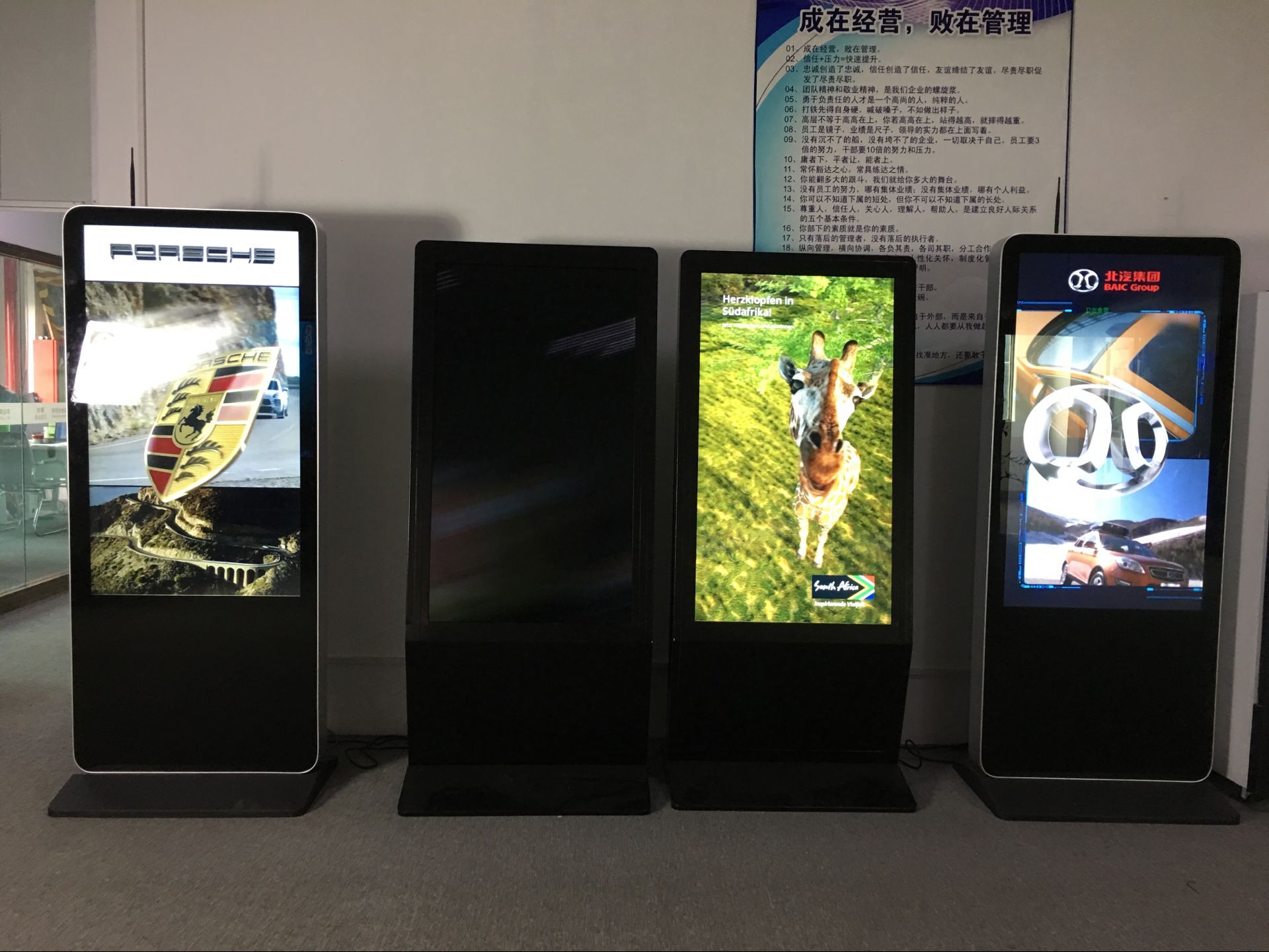
So when purchasing, don't assume a product uses holographic technology just because you see the word "Holographic."
What Is the Most Essential Difference Between Glasses-Free 3D and Holography?
There's a simple way to understand it.
Glasses-free 3D focuses on "different eyes seeing different pictures."
Holographic display focuses on "reconstructing the 3D light field or optical wavefront."
This is the most important technical distinction between the two.
Glasses-free 3D can distribute multiple views to different directions through optical structures.
Multi-view glasses-free 3D works by adding views in different directions so that viewers see images from different angles as they move.
Holographic display is another technical route entirely, requiring the processing of far more complex optical wave information.
Consequently, the two also face different challenges in engineering implementation.
The Viewing Angles Are Also Different
This is one of the differences ordinary users notice most easily.
Some traditional glasses-free 3D monitors have a so-called "optimal viewing zone."
Standing within this zone gives the best 3D effect.
Moving outside it may cause:
ghosting.
crosstalk.
view jumping.
weakened depth perception.
or even the left and right eyes seeing the wrong views.
This is because the system must accurately deliver different images to different viewing directions.
Related research also notes that autostereoscopic displays based on lenticular lenses or parallax barriers can be limited by viewing position, brightness, resolution, and viewing angle.
Display technologies that genuinely pursue light field or holographic reconstruction, by contrast, aim to provide more continuous parallax changes, so observers still perceive natural spatial changes after changing position.
That said, this does not mean every commercial product labeled "holographic" can achieve it.
Is Glasses-Free 3D Limited to "3D Inside the Screen"?
That would be too simple an understanding.
Well-crafted glasses-free 3D content can also produce a very pronounced sense of space.
For example, a car charging forward out of the picture.
People, products, or building models appearing to float in front of the screen.
The background extending behind the screen.
This effect is mainly produced by the combination of binocular parallax, occlusion relationships, perspective, motion parallax, and the depth design of the content itself.
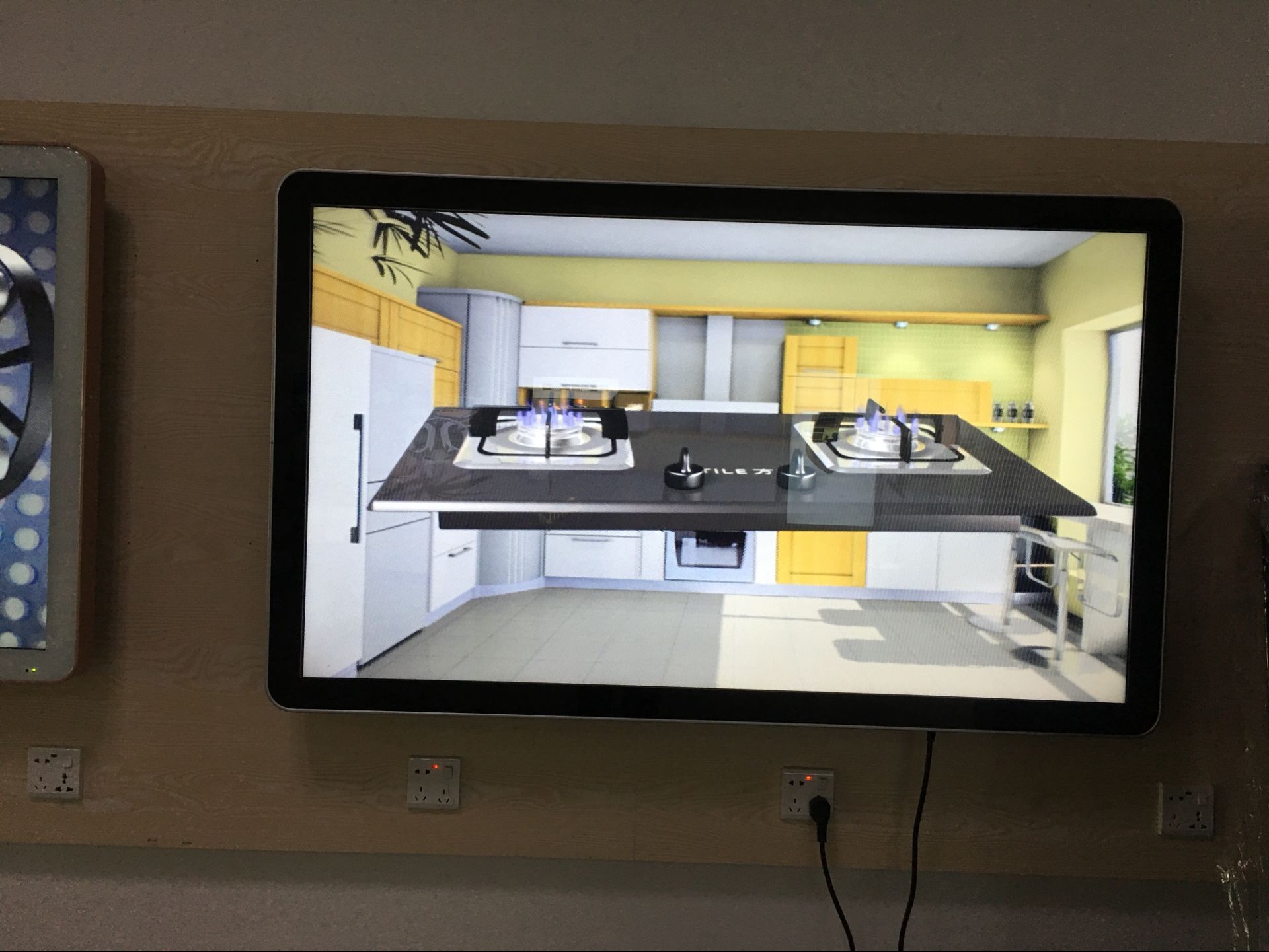
So even if the display device itself is a flat screen, it can create a powerful sense of space.
This is why glasses-free 3D generates such strong visual attraction in shopping malls, exhibition halls, and outdoor advertising today.
Must Holographic Display "Float in Mid-Air"?
No.
This is another very common misconception.
"Appearing to float" is just one visual manifestation, and by itself cannot prove that true holographic technology is used.
For example, transparent displays, special projection, reflective imaging, optical illusions, and some light field systems can all make images appear suspended in space.
Therefore:
floating ≠ holographic.
Likewise:
transparent ≠ holographic.
no glasses ≠ holographic.
360° viewing ≠ holographic.
These are merely possible visual presentations or viewing modes of a product, and cannot directly define its technical principle.
So What Is Light Field Display?
Here we need to bring in a third concept.
Light field display is closely related to both glasses-free 3D and holographic display, but it cannot simply be equated with either.
The goal of light field display is to emit different light information in different directions, so that observers see different viewpoints as their position changes.
It can therefore produce richer motion parallax.
In terms of technical classification, light fields can be realized through ray-direction control, whereas holographic display further involves the reconstruction of optical wavefronts.
It can be simply understood as:
Ordinary glasses-free 3D: mainly solves what the left and right eyes see.
Multi-view 3D: further solves what different positions see.
Light field display: further controls the direction of light in space.
Holographic display: attempts to reconstruct a more complete optical wavefront.
The technical boundaries of actual products are more complicated, but this understanding is enough to help procurement staff avoid conceptual confusion.
Why Are "Glasses-Free 3D" and "Holographic" Increasingly Blended Together?
Because display technologies are rapidly converging.
Today's new spatial display devices may simultaneously use:
eye tracking.
multi-view rendering.
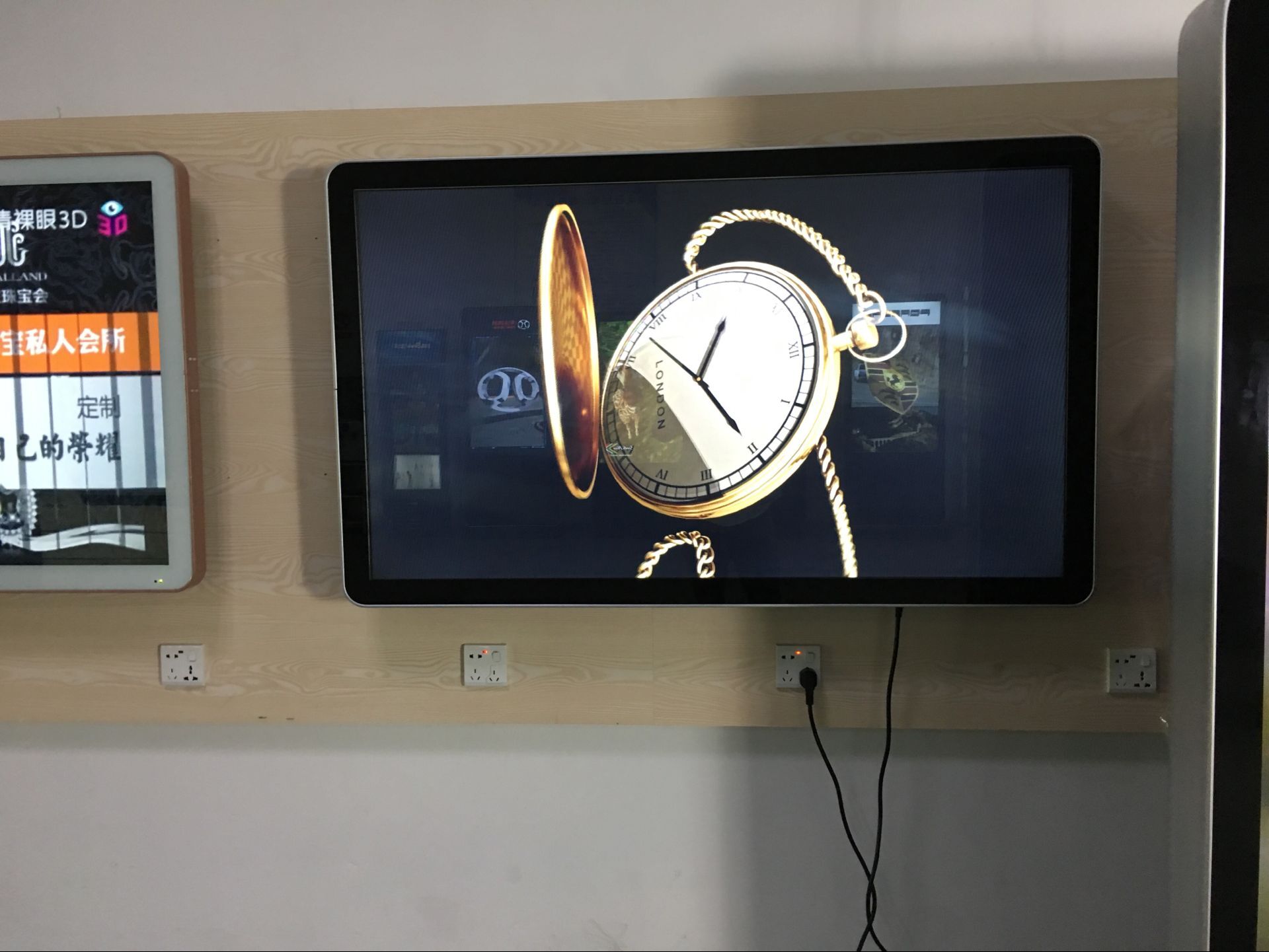
AI image processing.
optical lenses.
real-time 3D content generation.
light field technology.
and even partial holographic techniques.
For example, recent glasses-free spatial display products have begun incorporating real-time eye tracking and AI processing, enabling displays to dynamically adjust 3D content based on the viewer's position.
At the same time, academic research continues to expand the viewing angles and parallax range of glasses-free 3D.
This means future display devices will likely not stay strictly within any single traditional technical framework.
When Purchasing, Never Just Ask "Is It Holographic?"
If you are procuring 3D display equipment, that question is far too simple.
You should instead ask the supplier:
What 3D display technology is used?
Lenticular lens?
Parallax barrier?
Multi-view?
Light field?
Eye tracking?
Or digital holography?
Then keep asking:
What is the effective 3D resolution?
What is the actual viewing angle?
What is the optimal viewing distance?
How many simultaneous viewers are supported?
Is there noticeable crosstalk?
Is motion parallax supported?
What format does the 3D content require?
Is dedicated software or a rendering system needed?
These questions are far more valuable than the "Holographic" label.
How to Choose Between Glasses-Free 3D and Holography?
If your goal is commercial advertising, mall displays, exhibition halls, product showcases, or digital signage, glasses-free 3D can usually already meet many visual display needs.
Its advantage lies in the relative ease of balancing technical maturity, display size, content production methods, and commercial deployment costs.
If your project requires more realistic spatial optical effects—for example, more complete parallax or a more natural spatial viewing experience—then you should further investigate light field or true holographic display technology.
But such systems usually imply higher technical complexity, and require more rigorous consideration of resolution, field of view, computation, content production, and equipment cost.
Therefore, no single technology can simply be called "absolutely better."
The key is still the application scenario.
Finally: Don't Be Misled by the Word "Holographic"
Both glasses-free 3D and holographic display can deliver powerful three-dimensional visual experiences.
But they solve the problem in different ways.
Glasses-free 3D mainly creates stereoscopic perception by providing different views to different viewing directions.
Holographic display attempts to obtain more complete 3D optical information through optical wavefront reconstruction.
Between the two lie technology routes such as light field, multi-view, and volumetric display.
So next time you see a product advertised as:
"Glasses-free 3D holographic display."
Don't immediately assume it is a true holographic display.
First look at the technical principle.
Then look at the optical structure.
Finally look at the actual effect and specifications.
Looking for Commercial Glasses-Free 3D Display Solutions?
FreeGlass3D (Shenzhen ZXT LCD Technology Co., Ltd.) designs and manufactures commercial-grade autostereoscopic 3D monitors, spatial digital signage, and multi-view 3D video walls with 4K/8K resolution and eye-tracking options for retail, exhibitions, transport, and DOOH projects.