
How Do Images "Leap Off the Screen"? A 10-Minute Deep Dive into Glasses-Free 3D Display Technology In this article, ZXTLCD explains the key considerations behind glasses-free 3D display technology.
Have you ever wondered why cars, people, or products on certain monitors look as though they have already run out of the screen?
The monitor is clearly still a flat surface—so why can we perceive obvious front-to-back distance?
There is no "magic" behind this. It is glasses-free 3D display technology taking advantage of the way human eyes observe the world.
Why Can We See 3D?
Your left and right eyes do not observe objects from exactly the same position.
The two eyes see slightly different pictures, and the brain fuses them to judge how far away an object is.
So, if a monitor can let the left and right eyes see slightly different images, the brain will naturally produce a sense of depth.
This is the most fundamental principle of glasses-free 3D.
Why Do Ordinary Monitors Look Only "Flat"?
When an ordinary monitor displays a car, the left eye sees the car and the right eye sees the same car image.
Both eyes receive essentially identical information, so the brain naturally assumes it is right on the screen surface.
A glasses-free 3D monitor, however, performs different image processing.
It must prepare a left-eye view and a right-eye view, and let each eye see its corresponding image. Only then does the brain have enough information to judge the car's spatial position.
How Is "Leaping Off the Screen" Actually Produced?
Here is the most interesting part.
Suppose the screen displays a soccer ball.
If the system designs the ball to be located behind the screen, what you perceive is the ball "sinking" into the screen.
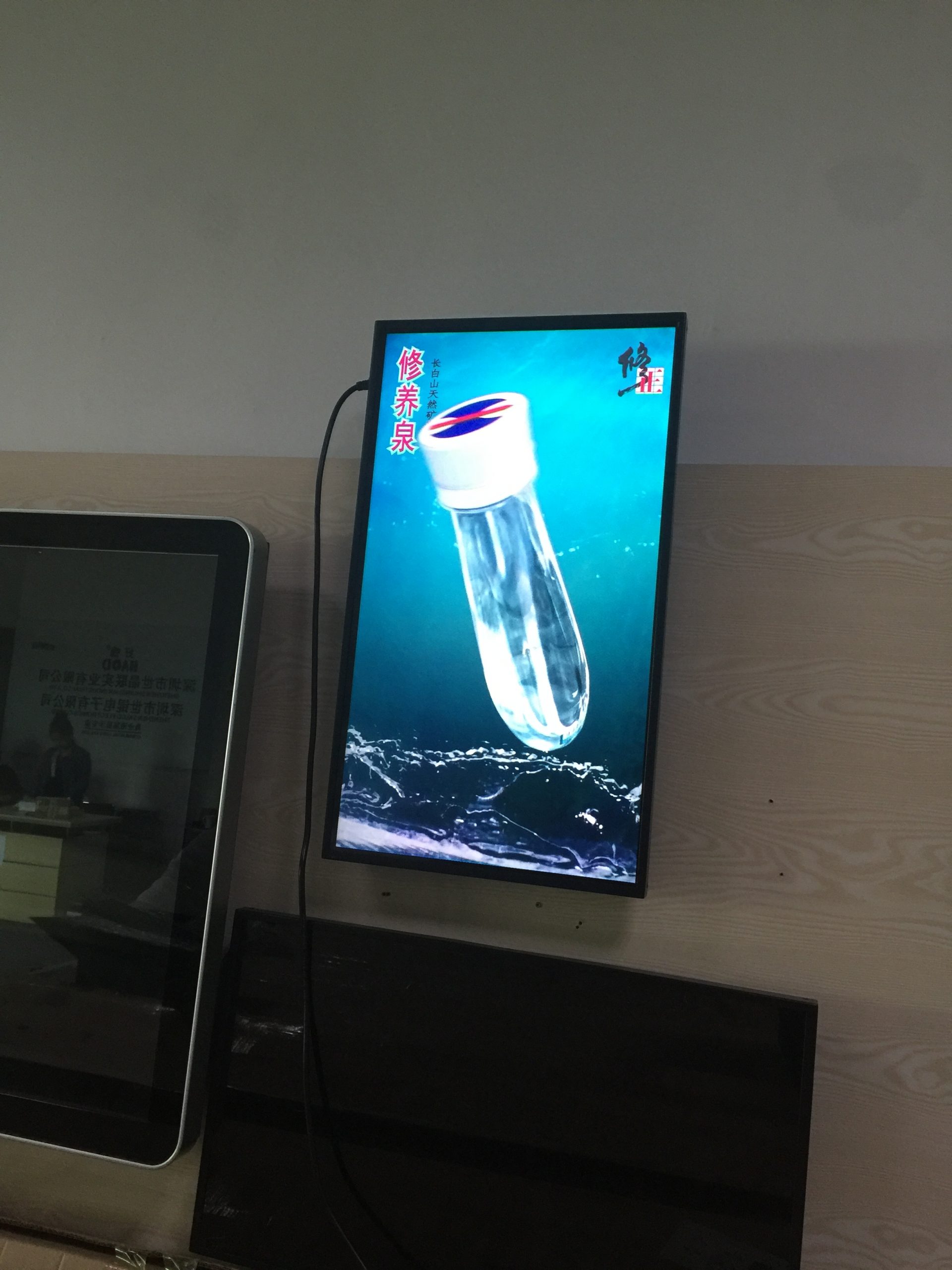
If the ball's virtual depth is designed to be in front of the screen, the effect becomes the ball seemingly flying out of the screen.
So what we call "leaping off the screen" is actually achieved by controlling the parallax between the left and right eyes, making the brain judge that the object is in front of the display.
The screen itself has not become three-dimensional; what has changed is the optical information you receive.
How Does a Monitor Let the Two Eyes See Different Images?
This is the real technical core of glasses-free 3D monitors.
If the left- and right-eye images were simply placed on an ordinary screen at the same time, both eyes would see all the content, resulting only in double images.
Therefore, a glasses-free 3D display system needs special optical structures to send different images in different directions.
Common solutions include parallax barriers, lenticular lenses, multi-view display, and light field display. Although these solutions differ in structure, their purpose is the same: to let viewers receive the correct visual information at different positions.
What Is a Parallax Barrier?
A parallax barrier can be simply understood as a very fine layer of "venetian blinds."
It restricts the propagation direction of light from some pixels, so that certain images enter mainly the left eye and others enter mainly the right eye.
This structure is relatively easy to understand, but it also brings issues such as light utilization efficiency and viewing zone limitations.
Therefore, the parallax barrier is just one technical route for glasses-free 3D; it does not mean all glasses-free 3D monitors use this structure.
What About Lenticular Lenses?
A lenticular lens can be understood as a layer of micro-lens arrays covering the front of the display panel.
Each lens column changes the direction of light propagation, directing different pixels into different viewing zones.
In this way, when your eyes are in the correct position, you can see different views separately.
Lenticular lenses can further evolve into multi-view display, letting viewers see images from different angles as they move.
Why Is the 3D Sometimes Very Strong but Weakens When You Change Position?
This is a very common issue with glasses-free 3D.
The optical system needs to deliver different views to specific spatial zones.
If you stand at the optimal viewing position, your left and right eyes receive the correct images and the 3D effect is very pronounced.
But if you move too far, ghosting, crosstalk, or weakened stereoscopic perception may occur.
Therefore, when evaluating a glasses-free 3D monitor, you should not just look at "whether there is a 3D effect," but also at its viewing distance, viewing angle, and optimal viewing zone.
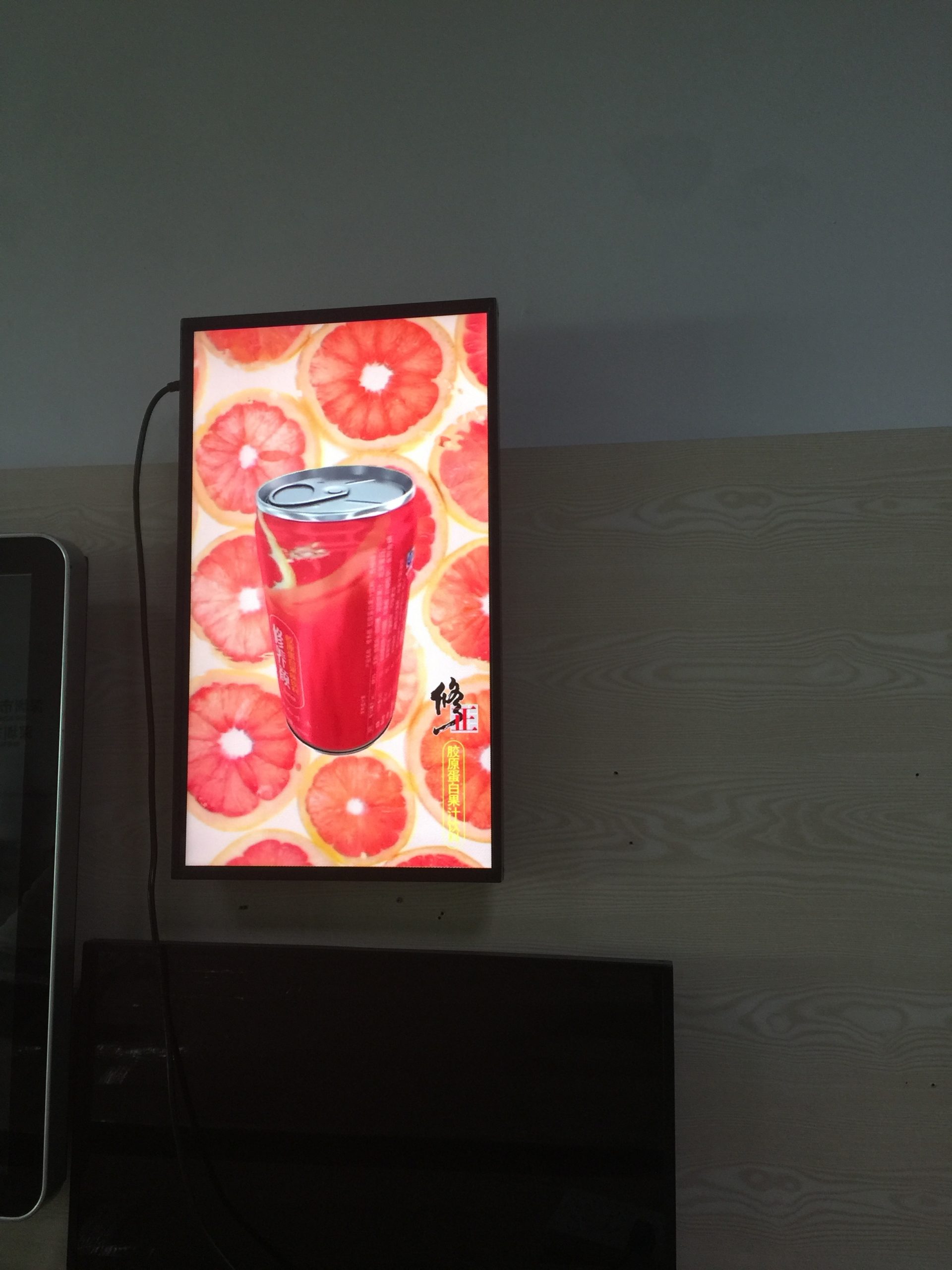
Traditional glasses-free 3D solutions have long been constrained by trade-offs among viewing angle, crosstalk, resolution, and depth of field.
Why Is Eye Tracking Now Being Added?
One solution is to let the monitor "know where you are."
Through cameras or other sensors, the system can detect the viewer's head and eye positions, then adjust the image output in real time.
That way, if you shift slightly to the left, the system adjusts accordingly; if you move right, the displayed content rematches as well.
This is eye-tracking glasses-free 3D.
Some new spatial displays have already combined eye tracking, real-time rendering, and optical systems to improve 3D stability as the viewer moves.
Why Does Multi-View Feel More Natural Than Ordinary Two-View?
If a monitor offers only two views, you can basically get the best effect only at specific positions.
Multi-view display prepares images from more angles simultaneously.
For example, as you move left you see one angle, and as you continue moving you see another.
This produces a more natural "motion parallax."
This is also why some high-end glasses-free 3D devices don't look like a 3D picture pasted on the screen, but more like an object actually existing in space.
Why Can't 3D Images Simply "Pop Out" Recklessly?
Many people assume that since objects can be made to exit the screen, the more exaggerated the better.
In fact, no.
If the difference between the left- and right-eye images is too large, the brain struggles to fuse the two pictures naturally, easily causing ghosting and visual fatigue.
Professional glasses-free 3D content production is therefore not about constantly pushing objects out of the screen.
What truly matters is controlling a reasonable depth range so that the foreground, middle ground, and background form natural spatial relationships.
For Great Glasses-Free 3D, Content Matters Just as Much
No matter how good the hardware is, poorly produced 3D content will still yield mediocre results.
Take a car commercial: simply enlarging the car will not automatically create a strong sense of depth.
A better approach is to have the car drive in from the distance with its front gradually approaching the screen, while using the spatial relationships among the body, wheels, and background to create depth.
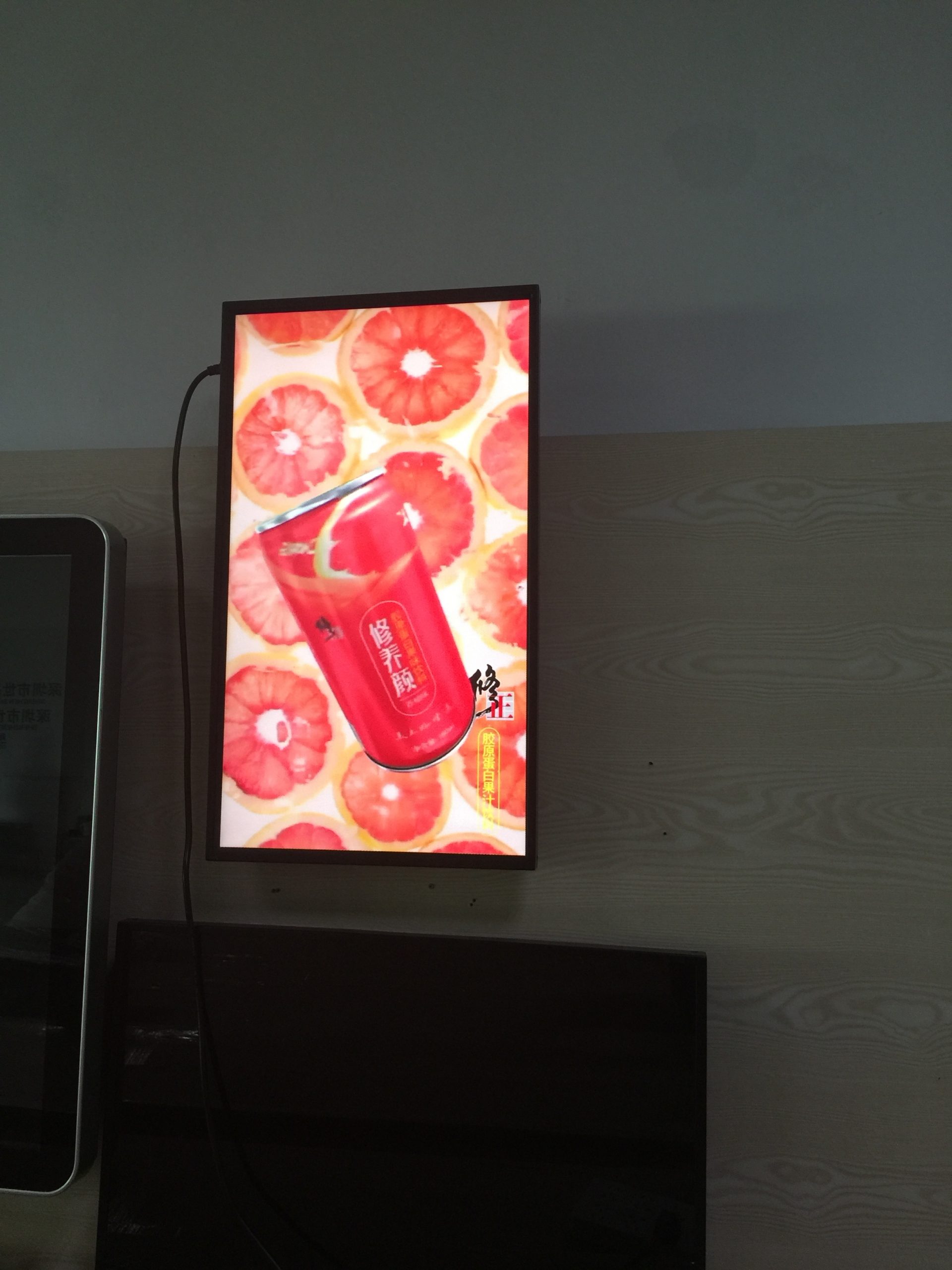
At that point, motion, occlusion, perspective, and parallax work together, and the image genuinely produces the feeling of "leaping out."
So glasses-free 3D is actually the joint result of:
display hardware + optical system + 3D content + image algorithms.
Are Glasses-Free 3D and Holographic Display the Same Thing?
Strictly speaking, no.
Glasses-free 3D mainly emphasizes seeing a stereoscopic visual effect without wearing 3D glasses.
"Holographic display" covers a much broader range of technologies, and many products on the market use "holographic" as a marketing name while actually employing LED, transparent display, projection, optical imaging, glasses-free 3D, or other technologies.
So when purchasing equipment, don't judge by the product name alone.
What you should really ask is:
What display technology does it use?
How Far Will Glasses-Free 3D Develop in the Future?
Currently, glasses-free 3D still needs to solve issues such as viewing zones, resolution, viewing angles, crosstalk, and content production.
But new algorithms and AI are changing the field.
Research published in Nature in 2025 demonstrated a glasses-free 3D solution combining binocular modeling with real-time deep-learning optimization; the prototype system achieved a continuous viewing range of over 100° and explored larger viewing spaces.
This means future glasses-free 3D monitors may no longer be just "screen + optical film."
They may further combine cameras, AI algorithms, real-time rendering, and spatial awareness, allowing the display to change its content in real time based on the viewer's position.
Finally: Does the Image Really "Leap Off the Screen"?
In the physical sense, no.
The screen is still a flat surface.
What has really changed is the light entering your eyes, and the brain's interpretation of that visual information.
When the left and right eyes receive the correct parallax, the brain rebuilds spatial depth.
Thus, an image that originally had only width and height gains a third dimension—"depth."
So:
the truly remarkable thing about glasses-free 3D is not making objects actually leave the screen, but making your brain believe—they are right beyond it.
Looking for Commercial Glasses-Free 3D Display Solutions?
FreeGlass3D (Shenzhen ZXT LCD Technology Co., Ltd.) designs and manufactures commercial-grade autostereoscopic 3D monitors, spatial digital signage, and multi-view 3D video walls with 4K/8K resolution and eye-tracking options for retail, exhibitions, transport, and DOOH projects.