
Why Do Glasses-Free 3D Ads Easily Capture Attention? From the "Out-of-Screen" Effect to Brand Communication
In shopping malls, airports, commercial streets, and urban public spaces, consumers encounter huge volumes of advertising every day. Ordinary flat ads are quickly ignored, while glasses-free 3D ads use spatial depth, depth of field, and visual illusion to give flat images a much stronger three-dimensional presence.
This is why more and more brands are starting to experiment with glasses-free 3D advertising.
Glasses-Free 3D Ads First Change the Way People "Watch Ads"
Traditional advertising is usually flat information delivery.
After seeing images, text, or ordinary video, consumers must actively interpret the ad's content.
Glasses-free 3D ads are different. Characters, products, or objects in the picture can form obvious depth relationships through spatial layering, giving viewers the visual sensation that "objects are moving outside the screen."
Common glasses-free 3D creative techniques include a car driving out of the depths of the picture toward the audience, a product gradually approaching from inside the screen, or an animal bursting out of the frame.
This visual shift can capture attention within seconds.
"Out of Screen" Is Not a Case of the More Exaggerated, the Better
Many people think the essence of a glasses-free 3D ad is to push objects as far out of the screen as possible.
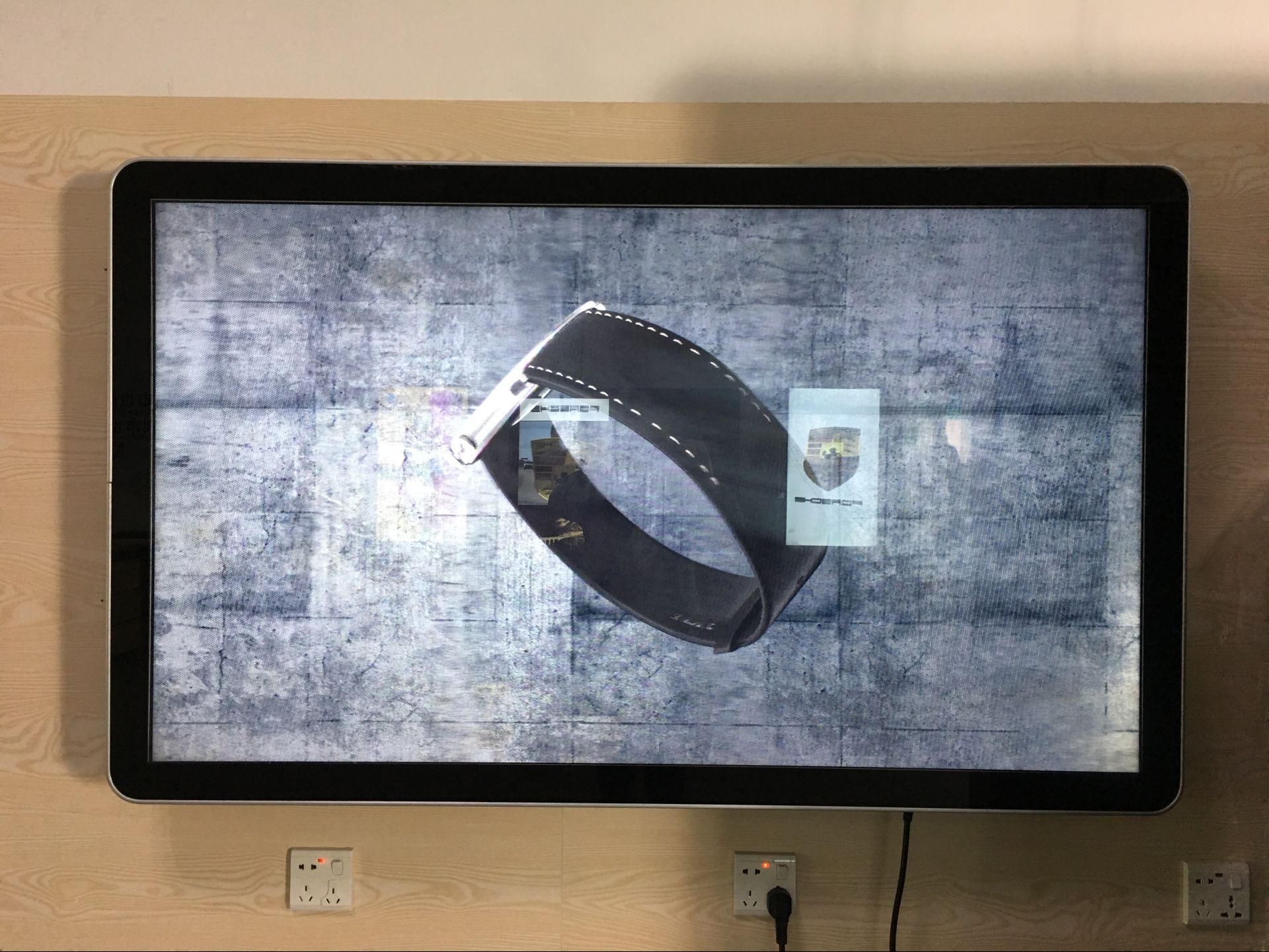
In reality, truly excellent 3D ads do not simply chase exaggerated effects.
If every element keeps rushing toward the audience, the picture easily causes visual fatigue, and the product message may be buried under the special effects.
A better approach is to build reasonable spatial layers.
Divide the picture into background, middle ground, and foreground, then create a sense of space through object motion, scale changes, and depth-of-field relationships.
This both highlights the 3D effect and preserves the delivery of brand information.
Product Display Is a Key Application of Glasses-Free 3D Advertising
Glasses-free 3D is especially suitable for displaying products with three-dimensional structures.
Cars, phones, smart devices, jewelry, footwear and apparel, and mechanical equipment can all be showcased in appearance and structure through 3D content.
Ordinary photos can only show one angle of a product, while 3D content lets the product rotate, explode into components, or be displayed dynamically.
For high-value products, this approach lets consumers understand product features far more intuitively.
Why Are Shopping Malls Ideal for Glasses-Free 3D?
Mall environments have large natural audiences.
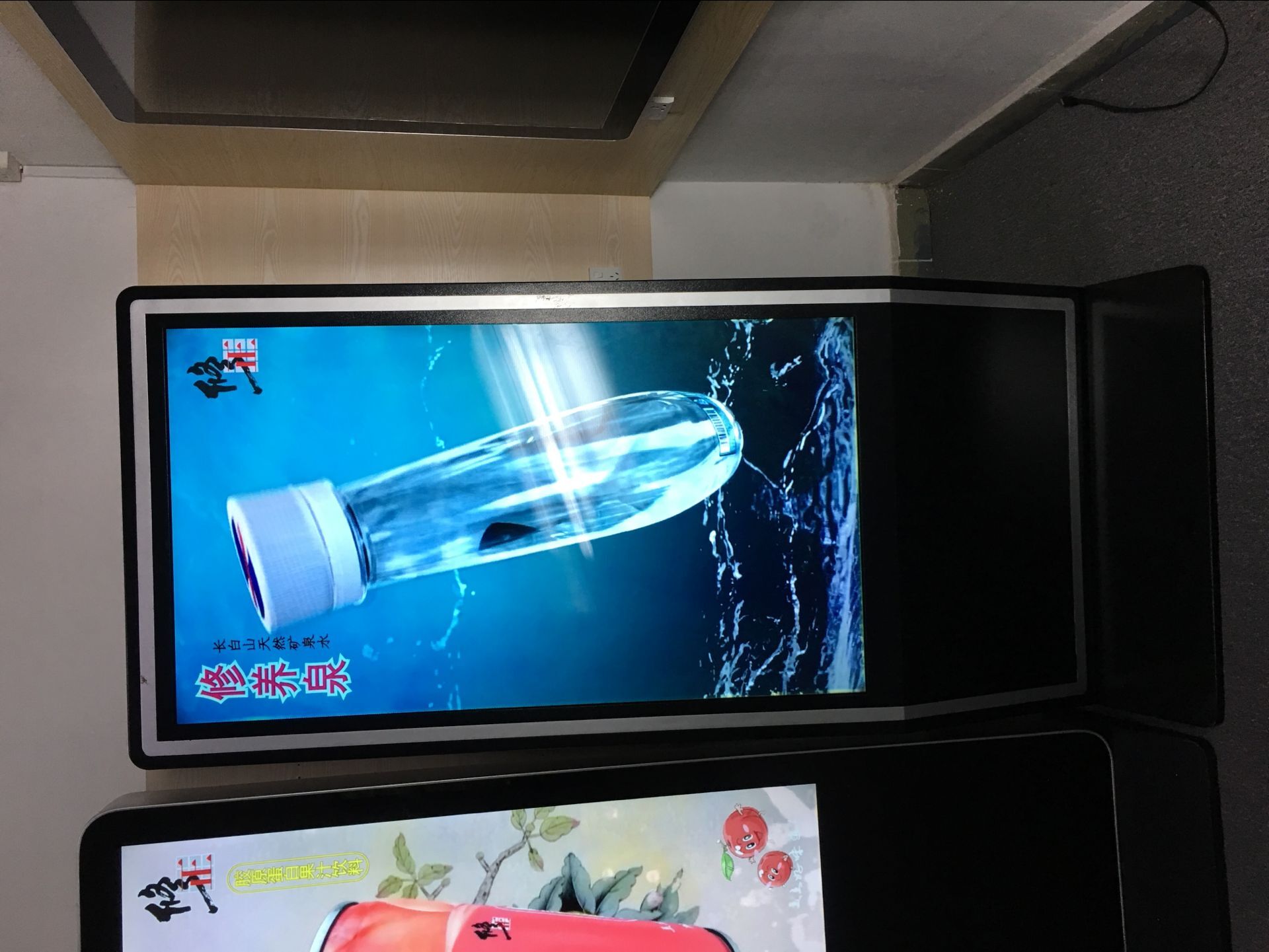
Consumers typically pause briefly when entering the mall, passing through the atrium, or waiting for elevators. A large 3D image with an obvious sense of space can easily become the visual focal point.
Glasses-free 3D display equipment can therefore serve not only an ad-playback function but also act as a digital visual installation within the mall space.
For example, large 65-inch, 85-inch, 86-inch, or even 110-inch glasses-free 3D displays can handle display tasks of different scales depending on the on-site space.
Glasses-Free 3D Strengthens Brand Memory
The value of advertising is not only "letting consumers see," but making them remember.
Compared with ordinary images, glasses-free 3D content with distinctive visual characteristics more easily forms unique visual memories.
When consumers photograph and share glasses-free 3D imagery on social media, the ad gains additional promotional reach.
This turns glasses-free 3D advertising from a mere media display into part of a brand's communication content.
Content Production Determines the Final Effect
The same glasses-free 3D display screen can produce completely different results when playing content of different quality.
When producing a glasses-free 3D ad, you need to consider screen size, viewing distance, viewing zone, content aspect ratio, and display technology.
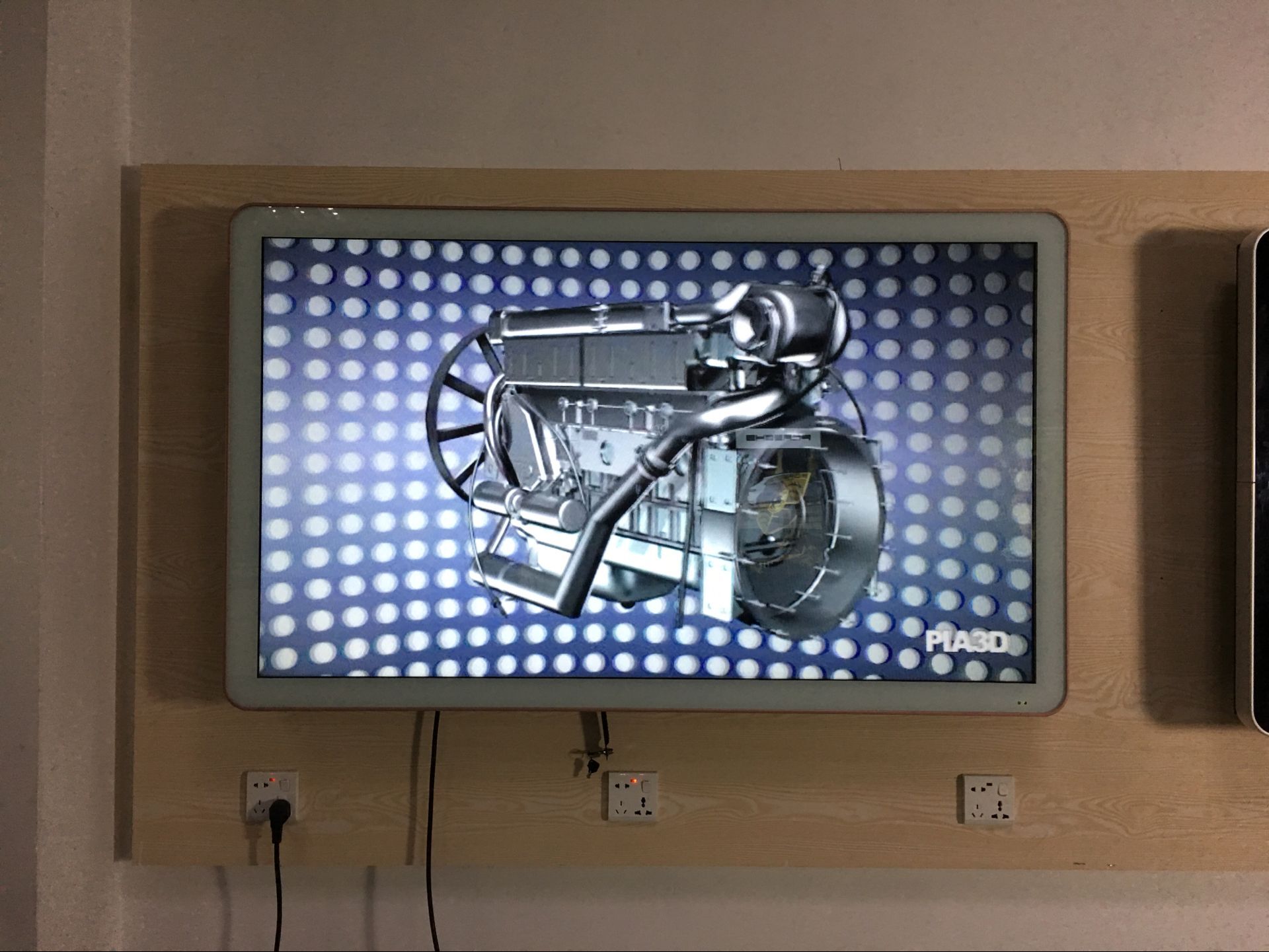
For example, large screens are suited to impactful images built on spatial depth, while smaller monitors are better for product display and close-range interaction.
Hardware and content should therefore be designed in tandem.
Glasses-Free 3D Advertising Is Not for Every Product
Although glasses-free 3D has strong visual appeal, not every ad needs 3D.
If the ad's content relies mainly on large amounts of text, pricing information, or complex explanations, ordinary digital signage may be more efficient.
Glasses-free 3D is better suited to marketing projects that need visual attraction, product display, brand exposure, and experiential scenarios.
From Advertising Screen to Brand Experience Portal
Future glasses-free 3D ads will not merely play commercial videos.
As interactive technology, AI content generation, real-time rendering, and multi-view display develop, glasses-free 3D display devices can further become brand experience portals.
Consumers will not only "see" products but interact with 3D content, learning about product structure, functions, and usage.
The true value of glasses-free 3D, therefore, is not simply creating an "out-of-screen" effect, but letting brand information enter consumers' field of vision in a more intuitive, more spatial way.
For brands seeking to establish visual differentiation in commercial spaces, this is an important reason why glasses-free 3D display technology deserves attention.
Looking for Commercial Glasses-Free 3D Display Solutions?
FreeGlass3D (Shenzhen ZXT LCD Technology Co., Ltd.) designs and manufactures commercial-grade autostereoscopic 3D monitors, spatial digital signage, and multi-view 3D video walls with 4K/8K resolution and eye-tracking options for retail, exhibitions, transport, and DOOH projects.