
In the past, discussions about glasses-free 3D display focused mainly on the display screen itself: whether the resolution was high enough, whether the screen was large enough, whether the 3D effect was convincing, and what the optimal viewing distance was. In this article, ZXTLCD explains the key considerations behind AI glasses-free 3D display.
With advances in artificial intelligence, computer vision, and real-time graphics, glasses-free 3D display is entering a new phase.
AI is now being applied to eye tracking, viewer-position recognition, viewpoint prediction, 3D content generation, image processing, and real-time rendering. Display devices no longer merely play pre-produced content in a fixed manner—they can now dynamically adjust the displayed content based on the viewer's position and visual state.
This means that glasses-free 3D displays of the future may gradually evolve from "screens that play 3D content" into intelligent display systems capable of understanding the viewing environment and adjusting visual information in real time.
Why Can AI Transform Glasses-Free 3D Display?
Conventional glasses-free 3D displays typically require display parameters and 3D content to be designed in advance.
The system outputs images according to preset settings, and viewers within the corresponding zone experience the stereoscopic effect.
This approach already delivers a decent visual experience, but it has one obvious limitation:
the display system usually does not know where the viewer is.
If the viewer changes position, the visual information received by the left and right eyes may change as well, and the final 3D effect may suffer.
The integration of AI and computer vision offers a new way to solve this problem.
Cameras can capture the viewer's position and facial features; algorithms analyze this data to determine the viewer's general direction, distance from the screen, and even estimate the position of the eyes.
Once the display system receives this information, it can adjust the image output according to the current viewing state.
This is the essential foundation for combining AI with glasses-free 3D.
Eye Tracking: A Key Component of AI-Driven Glasses-Free 3D
In an AI-powered glasses-free 3D system, eye tracking is a critical technical direction.
Simply put, a camera first captures an image of the viewer's face, and computer vision algorithms then identify the position of the eyes.
Compared with merely detecting "whether someone is standing in front of the screen," eye tracking requires far more refined information, such as: the approximate positions of the left and right eyes; the distance between the viewer and the screen; the viewing direction; the direction of head movement; and whether the viewer is within the main display zone.
When this data is delivered to the display system in real time, the system can adjust its visual output for the current viewer.
This is especially important for glasses-free 3D displays, which rely on a strong sense of spatial depth.
From Fixed Viewing Zones to Dynamic Viewing Zones
Conventional glasses-free 3D displays typically have a defined optimal viewing area.
When viewers stand in the correct position, they enjoy an ideal 3D effect; if they move to a wider angle, the stereoscopic effect may weaken.
AI eye-tracking technology offers a new solution.
If the system knows the viewer's position in real time, it can dynamically adjust the image information as the viewer moves.
For example:
when the viewer moves left, the system recalculates the current viewing position;
when the viewer moves right, the system adjusts the output again;
when the viewing distance changes, the system can recompute the visual parameters based on the new position.
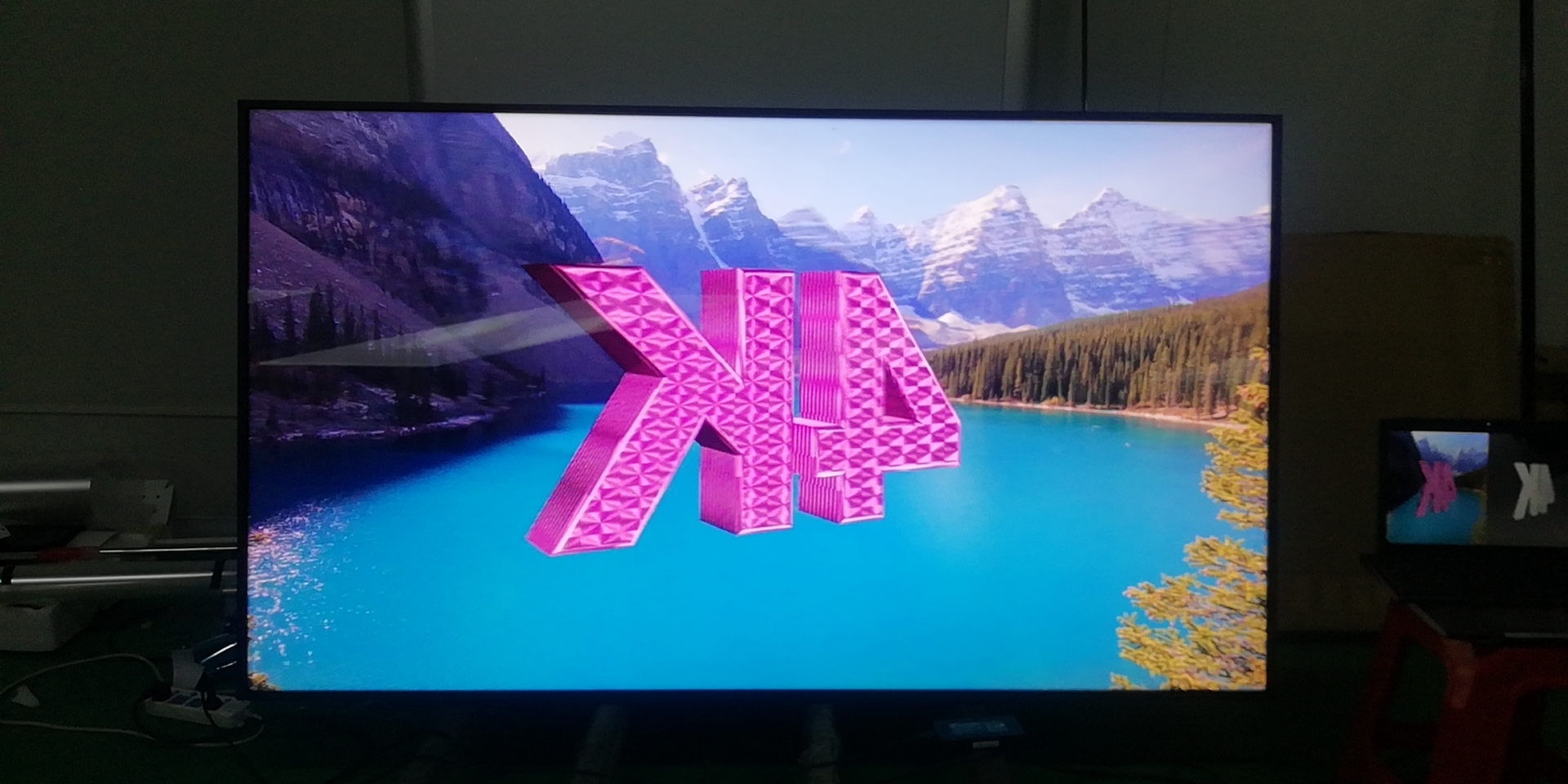
As a result, glasses-free 3D displays are likely to evolve from relatively fixed viewing zones toward a more dynamic viewing experience.
Of course, the actual results still depend on the display technology, optical structure, tracking precision, algorithm speed, and hardware performance.
Can AI Help Generate Glasses-Free 3D Content in Real Time?
Beyond eye tracking, another major impact of AI on glasses-free 3D display comes from content production.
Traditional 3D content creation involves modeling, materials, animation, lighting, rendering, and post-production.
A high-quality 3D advertisement often requires a long production cycle.
Generative AI is changing this workflow.
In the future, designers will be able to generate part of the visual content from text, images, or basic 3D models, then adapt it to the specifications of the glasses-free 3D display device.
For example, a brand can input product information and let AI assist in generating: 3D product showcase scenes; dynamic backgrounds; spatial advertising elements; virtual characters; product rotation animations; and 3D visual effects.
AI cannot simply replace professional 3D design, but it can reduce repetitive work and improve content production efficiency.
What Happens When AI Meets Real-Time Rendering?
Traditional advertising playback follows a "produce in advance, play on site" model.
Once a video is finished, it is exported as a fixed file, and the playback device plays it along a fixed timeline.
Real-time rendering is different.
The system can recalculate the picture based on real-time input data.
If AI identifies the viewer's position, the real-time rendering system can adjust the visual content according to the new viewing position.
This forms a new technology chain:
Camera → AI visual recognition → viewing position calculation → 3D scene adjustment → real-time rendering → display output
If this system achieves sufficiently low latency, the displayed picture can change as the viewer moves.
From an experience perspective, this comes much closer to true real-time spatial display than simply playing a fixed 3D video.
AI Can Also Boost 3D Content Production Efficiency
Glasses-free 3D advertising places high demands on content design.
If depth of field, parallax, or perspective relationships are handled poorly, even excellent display hardware may not produce satisfying results.
AI can take on auxiliary analysis tasks during content production.
For example, based on the target screen size and viewing distance, AI can help determine: which elements are suitable for the foreground; which elements should stay in the background; whether object motion is too drastic; whether depth-of-field changes are reasonable; whether the main subject stands out; and whether the content fits a particular display aspect ratio.
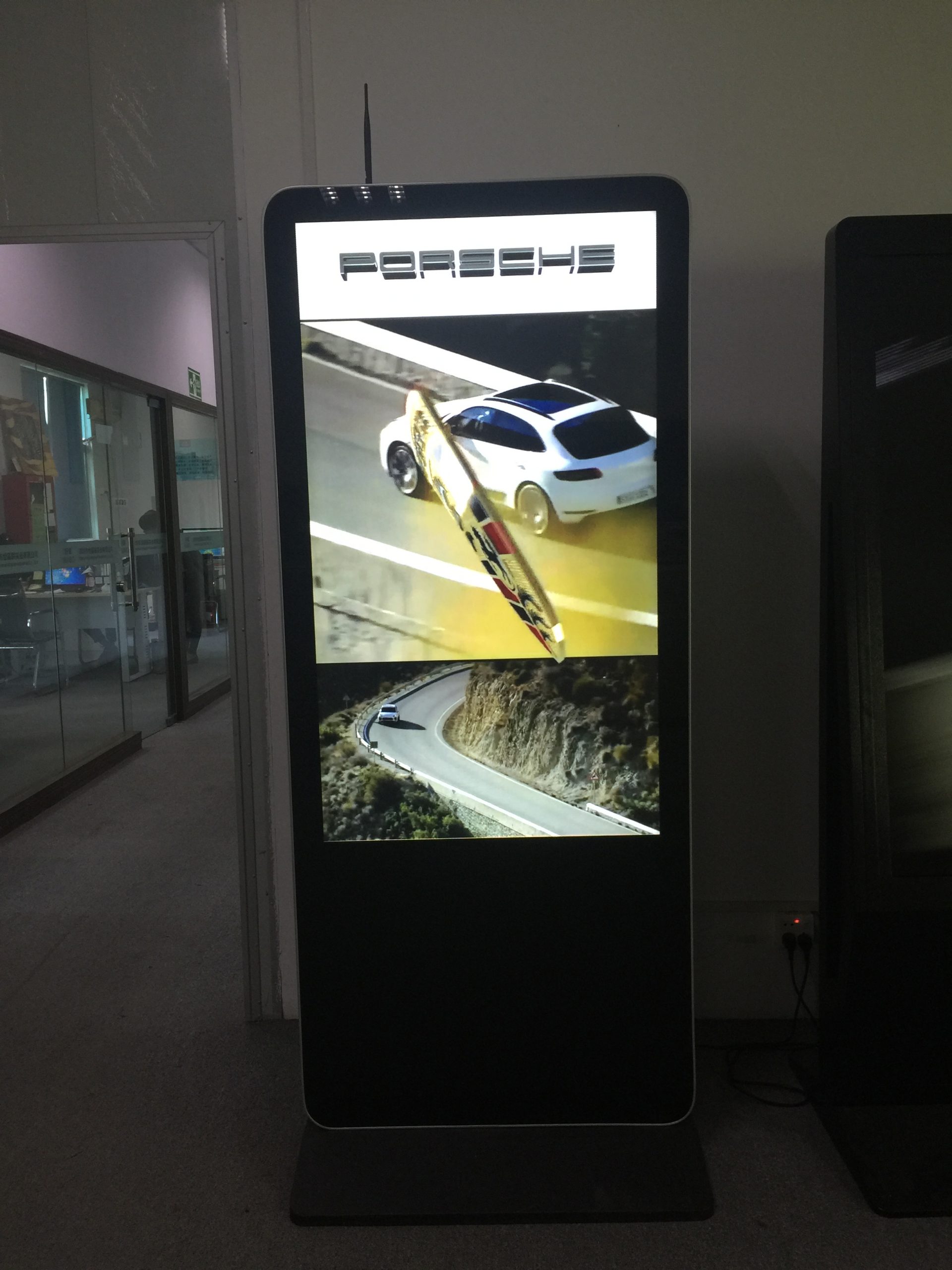
Going forward, AI could also automatically optimize 3D content so that the same set of assets adapts to display devices of different sizes and structures.
How Does AI Relate to Multi-View-Zone Display?
For glasses-free 3D systems designed for multiple simultaneous viewers, the situation becomes more complex.
With only one viewer, the system needs to track just one primary viewpoint.
But if several people are in front of the screen at once, their positions may be completely different.
The system then has to handle multiple viewing viewpoints.
Multi-view-zone display technology can deliver different visual information to different spatial areas, and AI can help the system identify the positions and number of viewers on site.
For example:
Cameras identify the crowd → AI analyzes the viewing areas → the system determines the primary viewpoints → the display system allocates visual information.
This has potential value for exhibition halls, museums, commercial displays, and interactive experience spaces.
However, multi-viewer, multi-viewpoint scenarios place significantly higher demands on display hardware and algorithms than single-viewer scenarios, so the actual capabilities of different products on the market today vary considerably.
Will AI Completely Eliminate the Optimal Viewing Distance for Glasses-Free 3D?
This is a question that is easily over-hyped.
AI can indeed help the system recognize the viewer's position and adjust certain display parameters accordingly.
But this does not mean AI can completely remove the physical limitations of the display device itself.
Factors such as screen size, pixel structure, optical components, field of view, and display resolution still affect the final result.
Therefore, a more accurate statement would be:
AI has the potential to expand the effective viewing range of glasses-free 3D and improve the visual experience at different viewing positions, but it cannot fully replace the physical capabilities of the display hardware.
This is an important point to keep in mind when evaluating AI-powered glasses-free 3D products.
Where Might AI-Powered Glasses-Free 3D Be Applied in the Future?
With the combination of AI and glasses-free 3D, the range of applications could expand further.
Commercial advertising
Advertising screens can optimize visual content based on on-site viewing conditions and use AI to assist in generating and updating advertising materials.
Retail display
Consumers can directly view 3D product models, and in the future interact with them through gestures, touch, or other forms of interaction.
Automotive display
Car brands can use 3D models to showcase vehicle exteriors, internal structures, and different configurations.
Museums
Historical artifacts, buildings, and complex structures can be visualized through 3D models.
Science and technology museums
Complex scientific principles can be explained through spatial animations, making abstract concepts more intuitive.
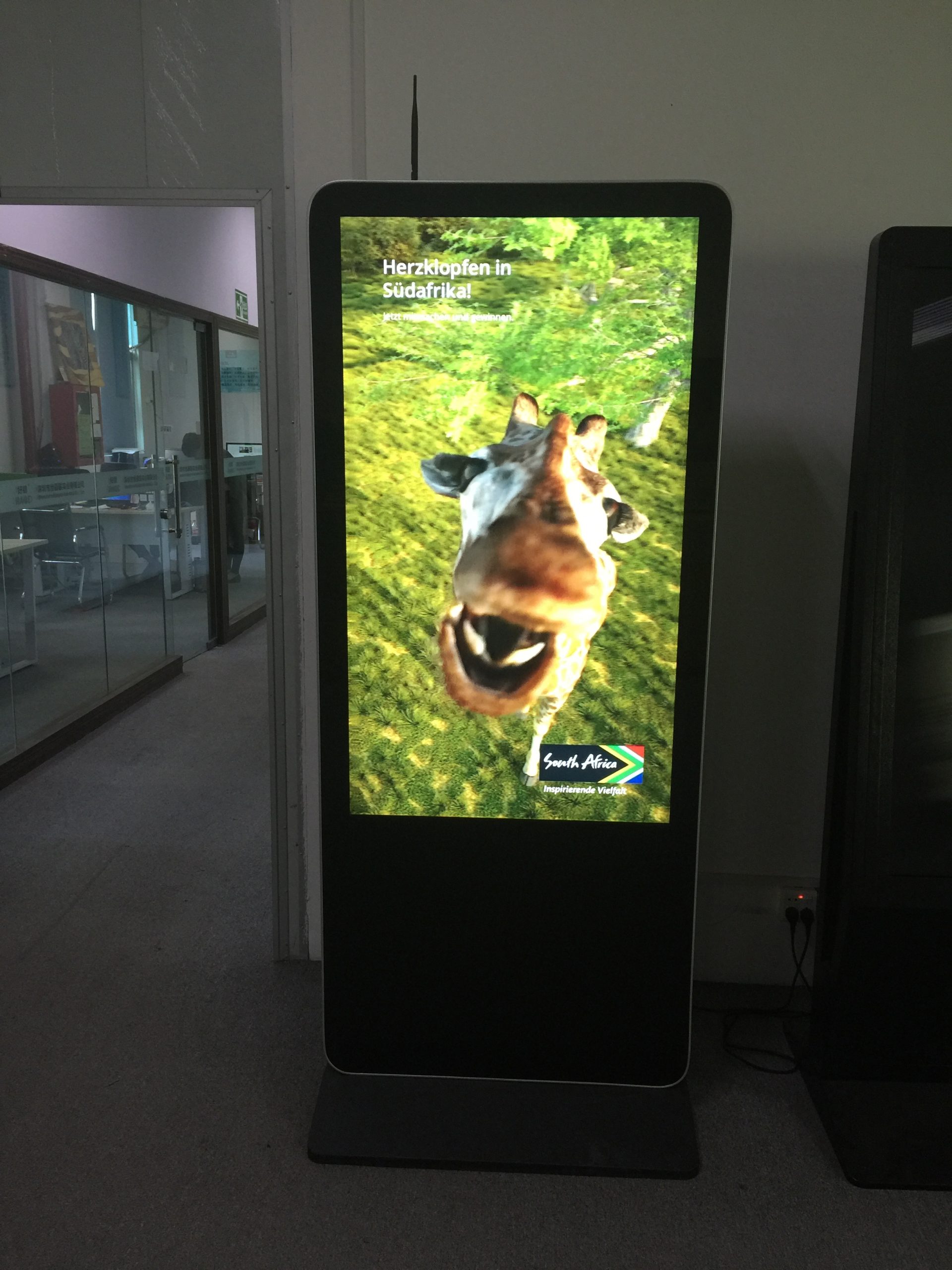
Corporate exhibition halls
Companies can showcase digital twins, industrial equipment, and product structures without moving real, large-scale equipment into the exhibition hall.
Healthcare and education
In professional applications, 3D models can help present human anatomy, engineering structures, and complex spatial relationships, although actual deployment needs to be validated against specific professional requirements.
From "Displaying 3D Content" to "Understanding the Viewer"
The core logic of conventional glasses-free 3D display can be summarized as:
the device plays content → the user watches the content.
With AI on board, the system's logic may gradually become:
the device senses the user → AI analyzes the user → the system adjusts the content → the user gets a real-time display experience.
The biggest difference between the two models is that the display system begins to possess a degree of "environmental awareness."
It no longer operates entirely on fixed parameters, but can dynamically adjust based on on-site information.
This is where AI can genuinely transform glasses-free 3D display.
AI Cannot Replace Display Hardware
Although AI brings many new possibilities to glasses-free 3D, the importance of the display device itself must not be overlooked.
The final 3D effect still depends on the display hardware.
When selecting a glasses-free 3D display device, you still need to consider: screen size; display resolution; brightness; refresh rate; contrast; viewing angle; number of viewing zones; eye-tracking capability; playback system; content compatibility; and heat dissipation and long-term operational stability.
For commercial projects, AI features should be viewed as part of the overall display solution, not as a standalone technology that replaces display hardware.
What Does the Future Hold for AI-Powered Glasses-Free 3D?
In terms of direction, AI is likely to make glasses-free 3D displays more intelligent.
Future systems may not only recognize the viewer's position but also adjust content in real time based on viewing behavior.
For example, a 3D product in an exhibition hall could change its display angle as a user approaches, moves away, or shifts position; a 3D car model could automatically switch between configurations based on the user's selection; a digital artifact in a museum could reveal different details based on viewer interaction.
Going further, AI-generated content, real-time 3D engines, computer vision, eye tracking, and glasses-free 3D display technology may together form a complete spatial display system.
This means future 3D display may no longer be just "turning 2D video into stereo," but may evolve toward real-time, interactive, intelligent, and personalized spatial visual experiences.
Conclusion: AI Is Moving Glasses-Free 3D from "Fixed Display" to "Intelligent Display"
The foundation of glasses-free 3D still lies in the human visual system's perception of spatial information, while the changes AI brings are mainly reflected in two areas: perception and real-time adjustment.
Through eye tracking and computer vision, systems can more accurately understand the viewer's position; through AI content generation, 3D asset production becomes more efficient; through real-time rendering, visual content can change according to the viewing state.
AI, therefore, is not simply adding a new feature to glasses-free 3D—it is gradually reshaping the relationship among content generation, viewing interaction, and display control.
From small interactive 3D displays, to large commercial glasses-free 3D screens, to multi-screen video walls and real-time spatial display systems, AI may well become a key technological component of the next stage.
That said, truly mature AI-powered glasses-free 3D solutions still require the coordinated cooperation of display hardware, optical systems, algorithms, content, and application scenarios.
What deserves attention in the future is not just "whether the screen can display 3D," but whether the screen can understand the viewer and create a more natural spatial visual experience for them in real time.
Looking for Commercial Glasses-Free 3D Display Solutions?
FreeGlass3D (Shenzhen ZXT LCD Technology Co., Ltd.) designs and manufactures commercial-grade autostereoscopic 3D monitors, spatial digital signage, and multi-view 3D video walls with 4K/8K resolution and eye-tracking options for retail, exhibitions, transport, and DOOH projects.